
Q1 2026 Market Update
Following escalating tensions in the Middle East and a breakdown in negotiations, military action involving the US and Israel at the end of February prompted a sharp reaction across global markets.
Energy prices rose quickly, and equity markets experienced an initial period of volatility. While markets have since shown signs of stabilising, uncertainty remains and further fluctuations are possible in the weeks ahead.
In this edition, we share insight into:
- The evolving situation in the Middle East and the Strait of Hormuz
- How recent developments are influencing the UK economy
- Why a long-term approach remains key during periods of uncertainty
The Middle East conflict and the Strait of Hormuz
Recent developments have brought renewed focus on the Strait of Hormuz, a critical route for global energy supply.
Alongside the human impact, the conflict has led to a sharp rise in energy prices and triggered volatility across global stock markets.
As the chart below illustrates, markets stabilised relatively quickly following the announcement of a temporary ceasefire and the start of peace talks.
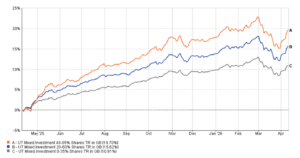
Source: FE fundinfo
However, at the time of writing, negotiations between the US and Iran have failed to reach a breakthrough, with the reopening of the Strait of Hormuz reported as one of the main sticking points during the talks.
Iran has indicated it would seek to retain control of the waterway following any resolution, a position that has been met with opposition from the US and other global leaders.
There have been reports that President Donald Trump may now seek to restrict access to the strait. Depending on how the situation develops, this could lead to further increases in oil prices and continued market uncertainty.
Full details of how any restrictions would work are yet to be clarified, though early reports suggest they may be targeted rather than a full closure of the route.
Any form of restriction could affect the flow of Iranian oil exports, potentially impacting a key source of revenue for the country, while also contributing to short-term pressure on global energy prices.
Before the conflict, Brent crude was around $70 a barrel. It is now hovering at just over $100.
There is now increasing pressure on global leaders to resolve the issue before it creates further difficulties for the global economy.
How events are shaping the UK economy
For the UK, the rise in energy prices caused by the Middle East conflict is expected to place upward pressure on inflation.
We are already seeing this feed through to everyday costs. According to a UK Parliament report, “petrol prices have risen by 14 pence a litre (about 10%) between 28 February and 23 March, while diesel prices have risen by 29 pence a litre (about 20%)”.
Farmers have also reported large increases in the cost of fuel and fertiliser, which may begin to impact food prices in the coming months. At the same time, many businesses are also facing higher operating costs, which may ultimately be passed on to consumers.
As a result, expectations around interest rates have shifted. While it had previously been anticipated that the Bank of England (BoE) may begin to cut interest rates, persistent inflationary pressures could limit the scope for reductions and may place upward pressure on rates if price growth remains elevated.
Why you can be reassured that your portfolio is positioned to weather financial uncertainty
Short-term market movements are a normal part of investing. Geopolitical events, like those we are currently seeing, have occurred many times before, and history shows that markets have consistently recovered over time.
For long-term investors, it is important to remember that your investment portfolio is designed with longevity in mind. It is aligned with your goals and your attitude to risk, and built to navigate different market conditions.
Selling investments during periods of market weakness can mean missing the eventual recovery.
Instead of reacting to short-term uncertainty, it can be helpful to:
- Keep your long-term goals front of mind
- Avoid checking your portfolio too frequently
- Stay focused on the role your investments play within your overall plan
Remaining invested ensures you are well positioned to benefit when markets begin to recover.
Your portfolio is designed to weather exactly this sort of environment. Staying the course and allowing time to do its work remains key.
We’re here to help you stay focused
We remain committed to supporting you with clear advice and steady guidance through every stage of your financial journey.
As events continue to unfold and influence markets in the coming weeks and months, we are here to guide you through periods of uncertainty and ensure you remain informed.
If you would like to discuss your investments or the current market environment, please do not hesitate to contact us.
| Please note:
This article is for general information only and does not constitute advice. The information is aimed at retail clients only. All information is correct at the time of writing and is subject to change in the future. The value of your investments (and any income from them) can go down as well as up and you may not get back the full amount you invested. Past performance is not a reliable indicator of future performance. Investments should be considered over the longer term and should fit in with your overall attitude to risk and financial circumstances |